


Senator Manning and Representatives LaRe, Brewer Announce Bipartisan Legislation to Combat Violent Crime and Improve Case Clearance Rates in Ohio
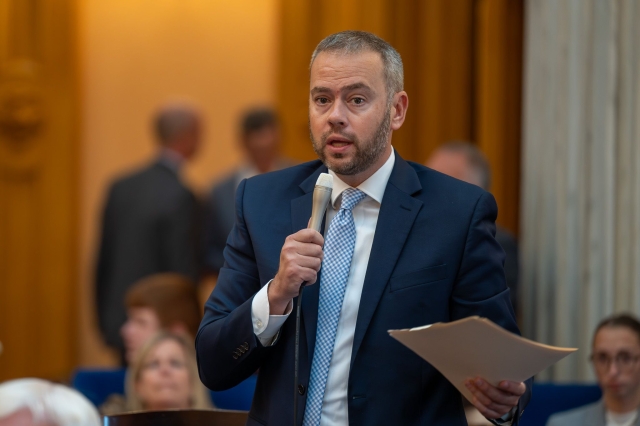
COLUMBUS — Today, State Senator Nathan Manning (R-North Ridgeville), State Representative Jeff LaRe (R-Violet Twp.), and State Representative Darnell T. Brewer (D-Cleveland) announced the joint introduction of Senate Bill 425 and House Bill 830, landmark legislation designed to aggressively reduce violent crime across Ohio. The bill focuses on a critical, yet often overlooked, metric of public safety: the "clearance rate."
Currently, only 34% of violent crimes in Ohio are "cleared" each year—meaning that in roughly two out of three violent incidents, an arrest is never made and the warrant remains active. This legislation aims to close that gap by providing local law enforcement with the resources and data-driven strategies necessary to identify, track, and apprehend violent offenders.
“We want to help our police by providing them with the resources necessary to close more of these cases,” said Senator Nathan Manning. “By utilizing data collection and providing more funding opportunities for equipment and training that officers need, Ohio departments will be better equipped to clear these older cases. This will not only provide closure for victims, but also significantly reduce crime across the state.”
The legislation establishes a competitive grant program for municipal police departments and county sheriff’s offices. Agencies can apply for funds to implement proven, evidence-based strategies, including:Focused Deterrence & Hotspot Policing: Concentrating resources on the specific areas and individuals most responsible for violence.
Enhanced Investigative Capacity: Funding for investigative staffing, overtime, and advanced forensic testing, such as DNA and ballistics (NIBIN).
Technological Modernization: Grants for analytical technology to better track crime patterns and clear existing warrant backlogs.
To ensure the program delivers a high return on investment for taxpayers, the bill includes strict requirements for accountability:The 75% Benchmark: At least 20% of all grant funding must be dedicated to improving clearance rates—such as solving cold cases—until the statewide clearance rate exceeds 75%.
Data-Driven Reporting: Participating agencies must collect and report detailed data on violent crimes and case outcomes to the state.
Independent Evaluation: An outside research partner will evaluate the program’s effectiveness, with regular public reports issued to the Governor and the General Assembly.
“Public safety depends on the certainty of consequences,” said Representative LaRe. “When two-thirds of violent crimes go unsolved, it emboldens bad actors and leaves victims without justice. This bill isn't just about more funding; it’s about smarter policing and ensuring that when a violent crime is committed, an arrest follows.”
“For too many families in Cleveland and across our state, justice remains out of reach because the system is stretched too thin to close cases,” said Representative Brewer. “By investing in forensic technology and dedicated investigative staffing, we are telling victims that their cases matter and telling our communities that we are serious about getting violent offenders off the streets. This is a common-sense, bipartisan step toward real public safety.”
###