
Ensuring Public Schools Focus on Education Over Indoctrination
The Senate won the fight to end discriminatory DEI in our college classrooms last year and this week the Senate approved Senate Bill 113 which extends the same protection to our public schools.
Senate Education Chairman Andrew Brenner sponsored the bill and joins The President's Podcast this week.
He highlights the importance of the bill, the major investment the General Assembly has made in K-12 schools over the last decade, and he responds to the recent promises by the incoming administration to "fully fund" public schools while promising property tax reforms without raising taxes.
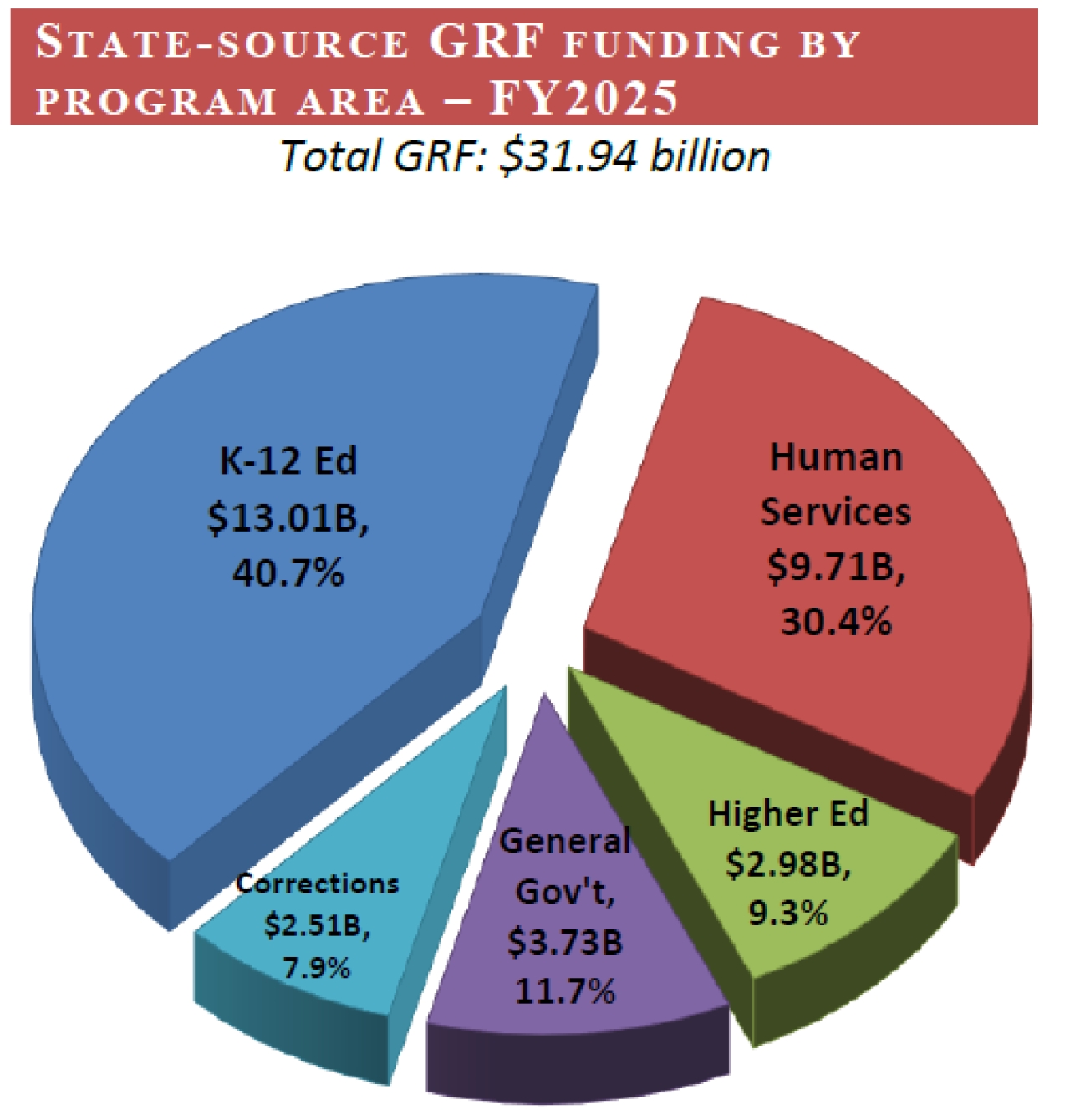
K-12 spending accounted for 40% of the state General Revenue Fund in Fiscal Year 2025. The GRF represents the amount of all state tax dollars collected.
Per pupil spending is now more than $18,000.
That's a 45% increase from 2016 when that figure was $12,676 and climbing.
The Ohio General Assembly passed substantial property tax reforms this year that were strengthened by an additional Homstead Exemption covering 720,000 Ohioans. That amounts to an extra $500 per household. This was made possible by responsible budgeting which provided $350 million to cover the one-time expansion exemption.
Additional permanent reforms included prohibiting emergency and replacement levies and empowering county budget commissions to review the total millage versus revenue raised with the ability to reduce the overall millage as a rebate to property taxpayers. Plus, the legislature linked both inside and outside millage to no more than the rate of inflation. This prevents the sharp increases in tax bills that outraged taxpayers.
63% of all property taxes collected go to school districts. That's about $2 out of every $3. So what about the lottery? Wasn't that supposed to go to schools? The answer is it does. 2025 lottery profit revenue hit a record $1.52 billion for K-12 education but that only represents 11.7% of what the state spent on public schools.
Still looming is the effort—a petition drive— to repeal property taxes statewide. That would repeal upwards of $24 billion and cost schools nearly $15 billion. Covering the loss of the local tax base just for public schools would require the state income tax of 2.75% to climb to 7%. That's an increase of 153%. Following a decade of lowering the state income tax burden on Ohioans from 9 brackets down to a single flat tax, it is safe to say that the legislature will have no interest in raising taxes in the 137th General Assembly that begins in January.
The incoming Acton Administration will face some very tough choices in crafting its first budget. A recent On The Record survey, a question included in our weekly newsletter, showed that 60% of our readers believed that the new administration will immediately try to raise income taxes. It will be an interesting year to watch for political pundits, columnists, but even more so for taxpayers. We look forward to hearing from you.
The President's Podcast is available on YouTube, Spotfiy, Apple Podcasts, Amazon Podcasts, and iHeart.